 |
| Image 1. Podcasts |
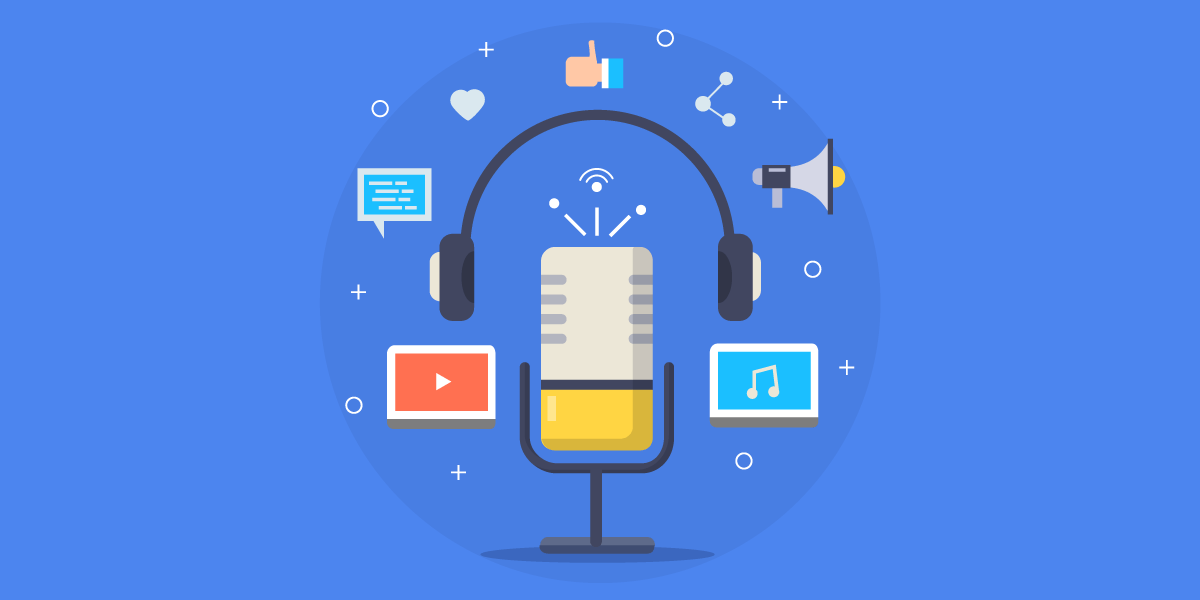
As an educator, should you integrate podcasts into the curriculum? Yes! As one form of technology integration, podcasts can be a useful tool in any curriculum.
I'll start by sharing my personal experience with podcasts: The first thing I think of when I hear the word podcast is "NPR", or National Public Radio. I grew up listening to NPR with my dad and still listen to NPR news every morning. My father would download the podcasts onto his MP3 player and play them in the car through an adapter for our cassette player on our morning commute to school and work. For me, podcasts bring good memories of discussion and debate.
Well, podcasts can be used in classrooms for discussion and debate as well! A podcast, defined by Chung (2008), is "a medium that services a collection of audio or video files that people freely subscribe to via the Internet" (p. 1). Audio files can be listened to on a variety of devices, but a video podcast would typically be viewed on a computer, phone, or tablet with a screen.
Podcasts have come a long way. Now, you can find a podcast on anything and everything. Khan Academy is one of the most famous podcast websites, with a mission to offer free educational videos. It started off as one person tutoring his family member and has expanded to cover a huge variety of material for all ages. If you haven't visited their site yet, I highly recommend it!
As Dr. Fowler highlighted in our interview last week, podcasts are great for adult students because they fit with their life. Taylor, McGrath-Champ, & Clarkeburn (2012) recommend podcasts as a form of preparing for class. Students can review the podcast independently and then come together to discuss their findings and relate it back to the course material.
Let's review some of the Pros and Cons of podcasts in education:
I'll start by sharing my personal experience with podcasts: The first thing I think of when I hear the word podcast is "NPR", or National Public Radio. I grew up listening to NPR with my dad and still listen to NPR news every morning. My father would download the podcasts onto his MP3 player and play them in the car through an adapter for our cassette player on our morning commute to school and work. For me, podcasts bring good memories of discussion and debate.
Well, podcasts can be used in classrooms for discussion and debate as well! A podcast, defined by Chung (2008), is "a medium that services a collection of audio or video files that people freely subscribe to via the Internet" (p. 1). Audio files can be listened to on a variety of devices, but a video podcast would typically be viewed on a computer, phone, or tablet with a screen.
Podcasts have come a long way. Now, you can find a podcast on anything and everything. Khan Academy is one of the most famous podcast websites, with a mission to offer free educational videos. It started off as one person tutoring his family member and has expanded to cover a huge variety of material for all ages. If you haven't visited their site yet, I highly recommend it!
As Dr. Fowler highlighted in our interview last week, podcasts are great for adult students because they fit with their life. Taylor, McGrath-Champ, & Clarkeburn (2012) recommend podcasts as a form of preparing for class. Students can review the podcast independently and then come together to discuss their findings and relate it back to the course material.
Let's review some of the Pros and Cons of podcasts in education:
 |
| Image 2. Pros |
- Students can integrate audio podcasts into their daily routines and activities.
- There's a podcast about everything! Podcasts offer a variety of perspectives on topics in education by experts in the field.
- Students can review the podcast as many times as they need to understand the content.
- Independent task to prepare students for course lecture.
 |
| Image 3. Cons |
- Video podcasts require dedicated time and focus.
- Podcasts require students to have the ability to record (webcam, smart phone, microphone)
- If podcasts are too long, students could lose interest.
- Podcasts are not typically interactive - students can leave comments on the place where they are posted, but the original user cannot edit their content to interact with the comments/feedback.
 |
| Image 4. Podcast Cartoon |
For those looking for new ways to integrate technology into their classroom: Start by looking for TEDxTalk videos and podcasts. A quick search on the material you are teaching and you will most likely find a video that corresponds! I was introduced to TED Conferences in 2009 by my brilliant English professor who promoted social change. Over the last ten years, I would estimate that I have viewed approximately 30-40 different ones, and I plan to use them in any future courses I teach.
I'd love to hear your ideas on how to integrate podcasts into curriculum!
References
Chung, M., & Kansas State University, degree granting institution. (2008). Podcast use motivations and patterns among college students.
Taylor, L., McGrath-Champ, S., & Clarkeburn, H. (2012). Supporting student self-study: The educational design of podcasts in a collaborative learning context. Active Learning in Higher Education, 13(1), 77–90. https://doi.org/10.1177/1469787411429186
Image References
Image 1. https://www.thoughtworks.com/podcasts
Images 2 and 3. https://www.rebelcircus.com/blog/pros-cons-open-relationship/
Image 4. https://vilmanunez.com/subir-podcast-itunes-y-otros/